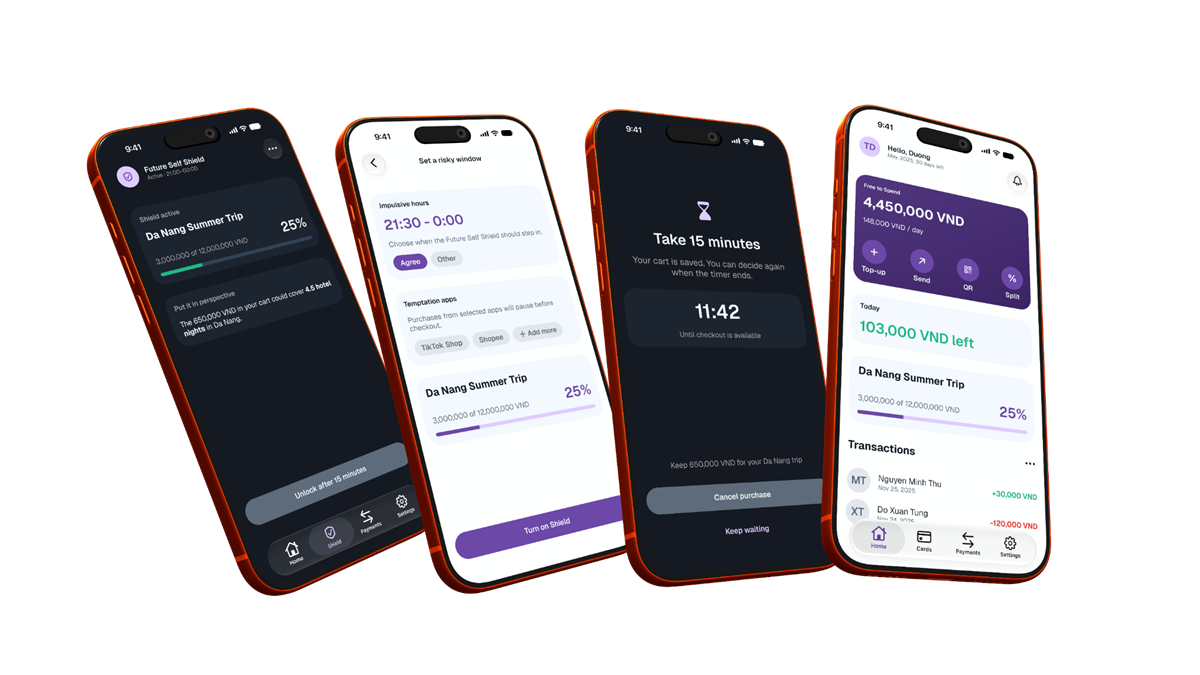
Case Study
We designed the wrong
solution, but...
A case study in finding the right moment to intervene.
What we heard
Knowing the rules
wasn't enough.
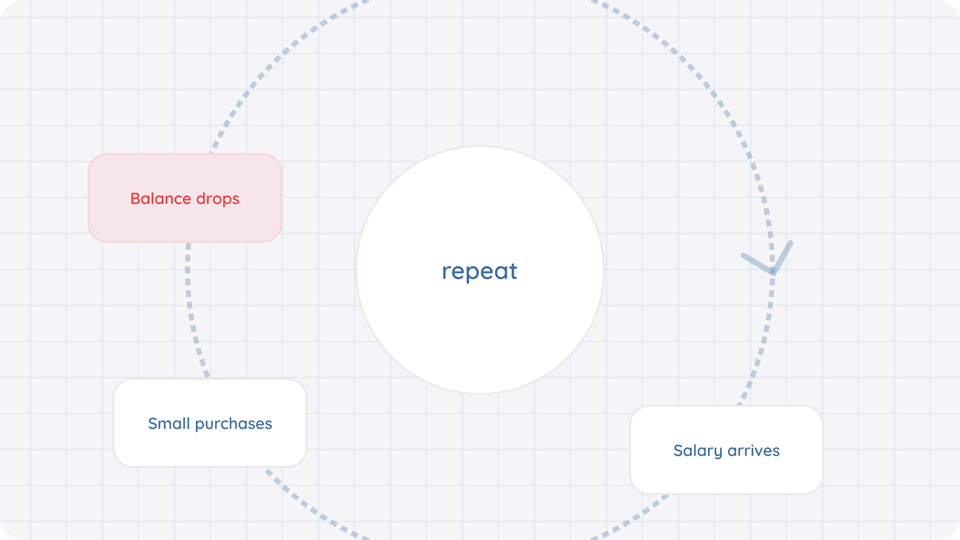
“By the middle of the month, I open my banking app and panic.” Duong understood her budget, yet small purchases kept restarting the same loop.
Finding 1
The balance told
the wrong story.
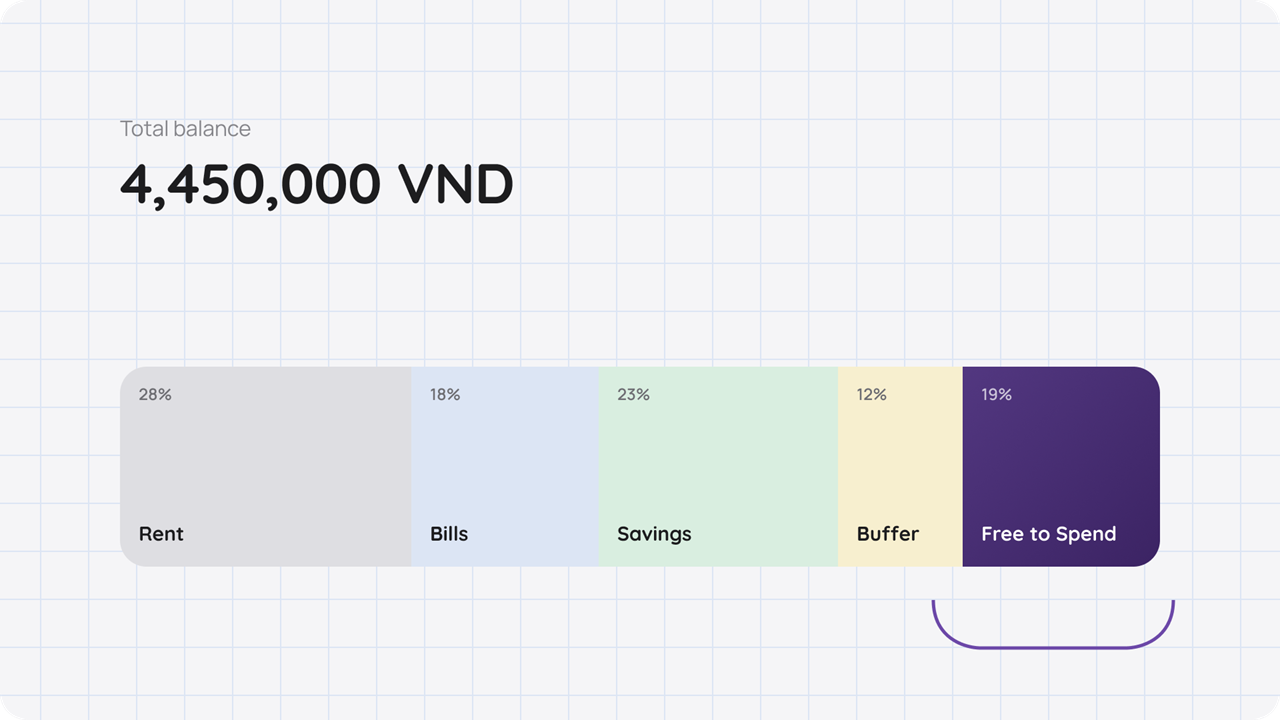
The app showed “money I have now.” Rent, bills, savings, and safety funds stayed invisible, so future commitments felt less real.
Finding 2
Support arrived
too late.
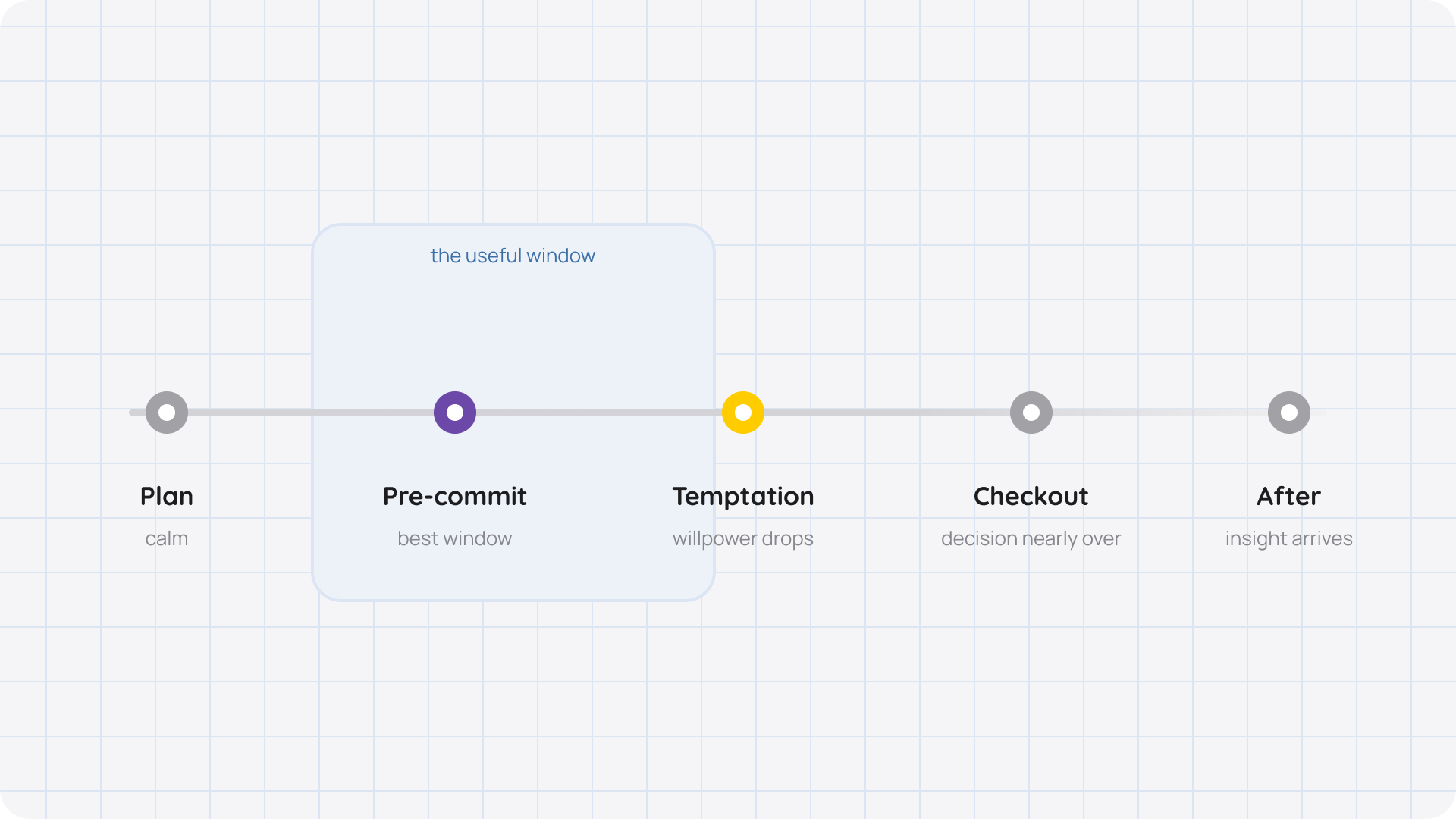
Most apps explain spending after the money has gone. By then, the decision is over. The useful window opens earlier, while a calmer choice is still possible.
Research scope
We interviewed 12 participants in Hanoi and HCMC across four needs: tracking, emotional spending, saving, and investing. Emotional spending was both frequent and underserved.
Our first answer
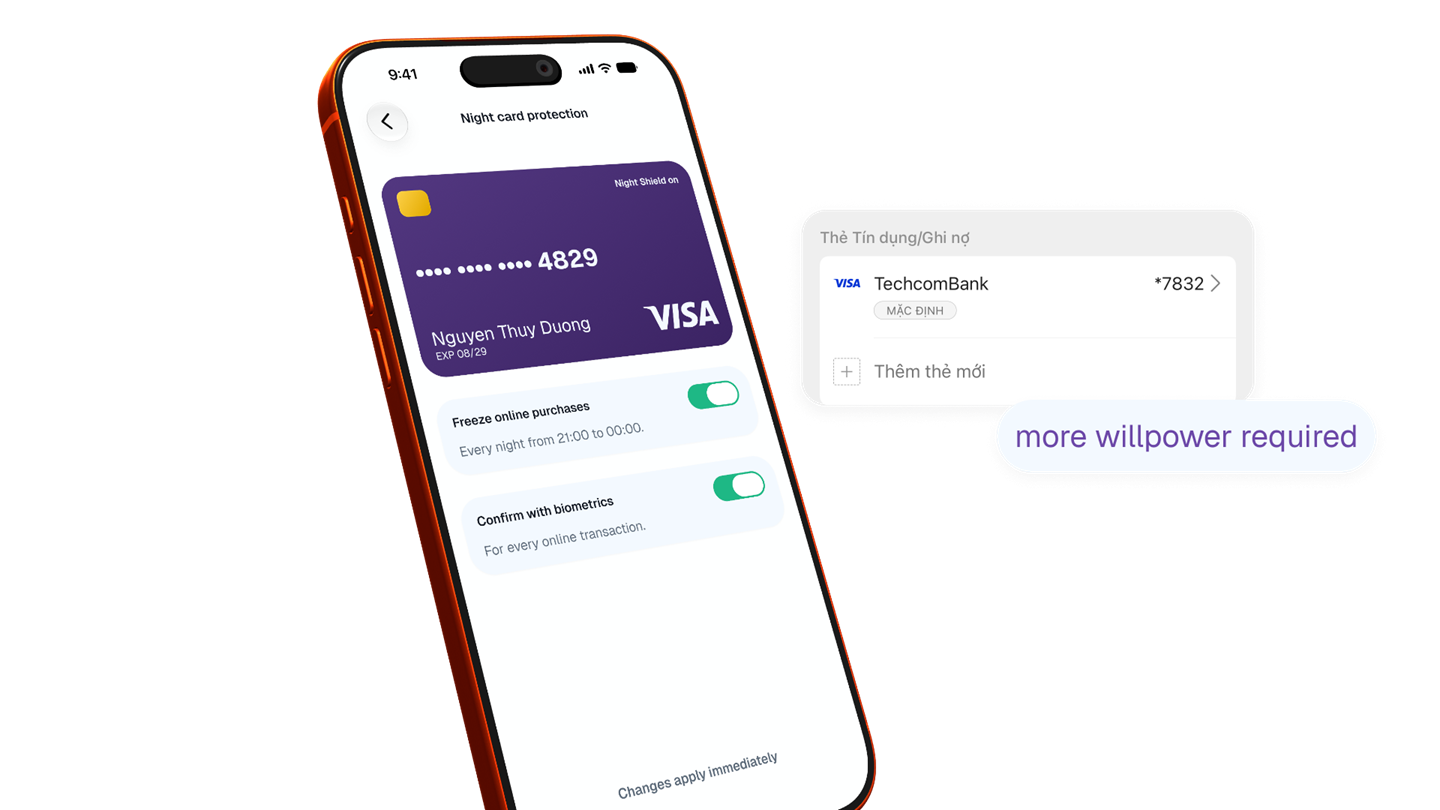
Perfect on paper.
Wrong in practice.
A limited virtual card looked feasible. But at checkout, Duong still had to reject her usual card and choose protection when her willpower was weakest.
The contradiction
If she can choose the protective card while impulsive, she has already solved the problem.
The question that changed everything
We stopped designing
for willpower.
How might we protect Duong before temptation begins?
How might we show the trade-off at purchase?
Design for pre-commitment before temptation.
From insight to system
Do not begin with
a feature list.
Each layer responds to one observed behavioral gap, turning the research into a connected sequence of support.
Make commitments concrete through Free to Spend.
Move the hard choice earlier through Risky Window Protection.
Make restraint rewarding through goal-linked streaks.
The final concept
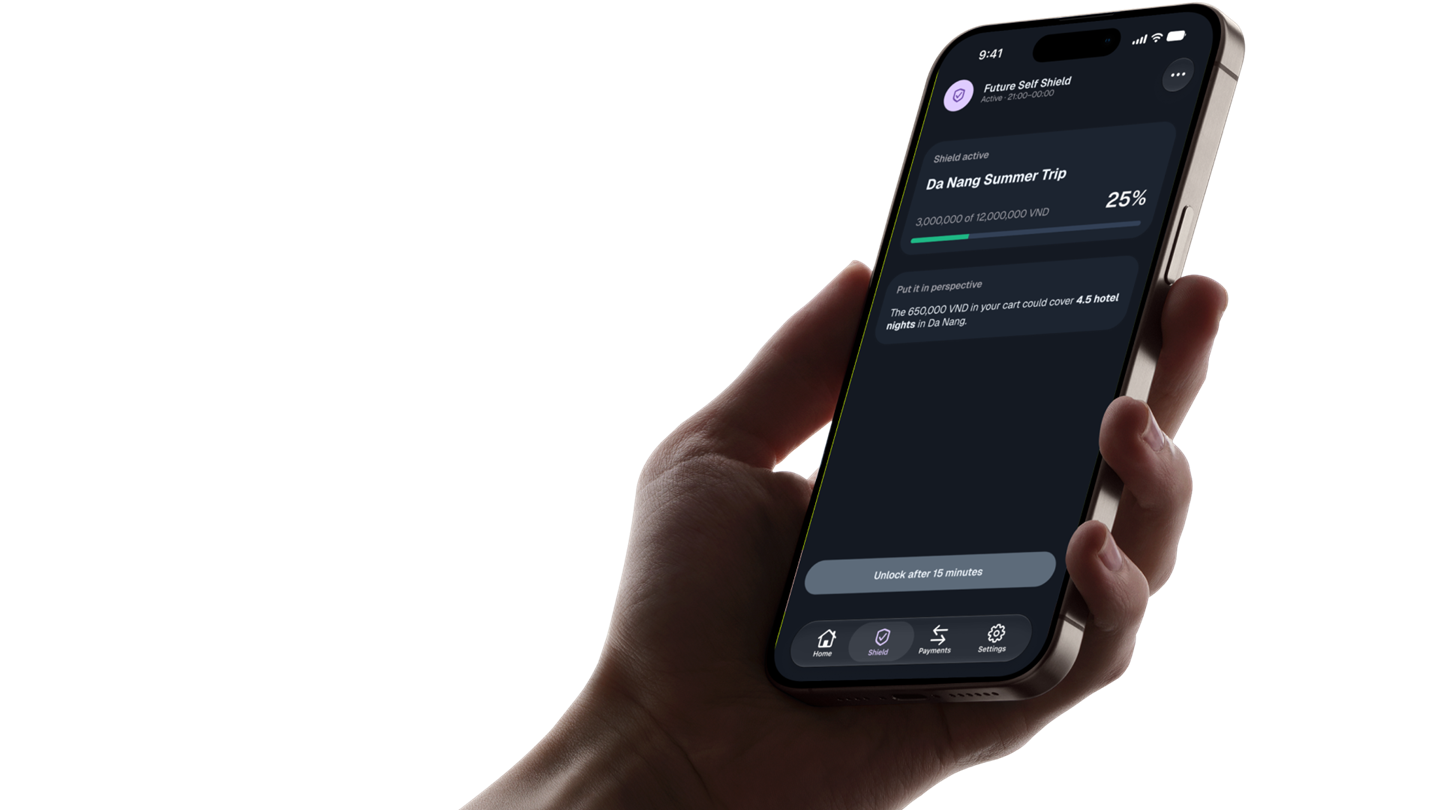
Calm Duong protects
future Duong.
Three moments form one behavioral system: see what is safe, choose while calm, and make the future visible.
Three moments
One connected
experience.
Free to Spend changes the financial anchor, Risky Window Protection moves the hard choice earlier, and Streaks make restraint rewarding.
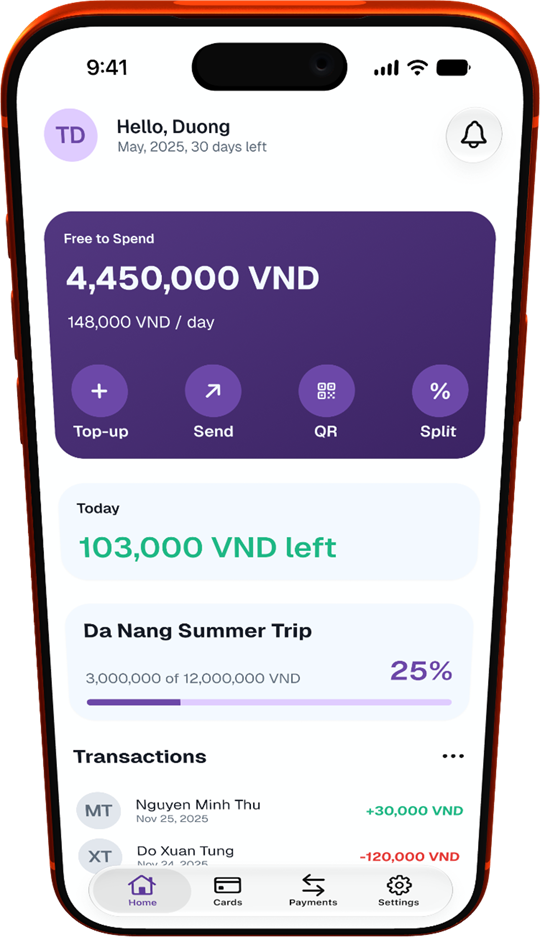
See what is safe.
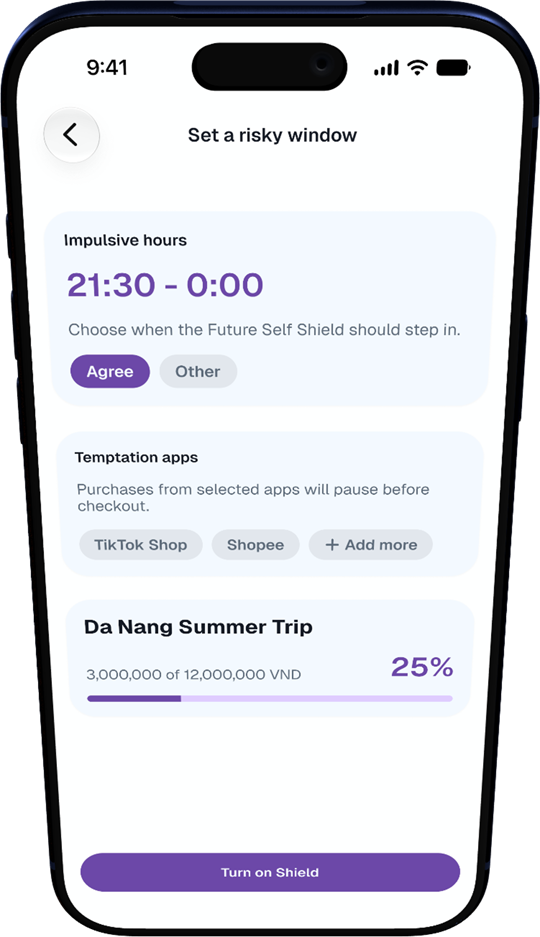
Choose while calm.
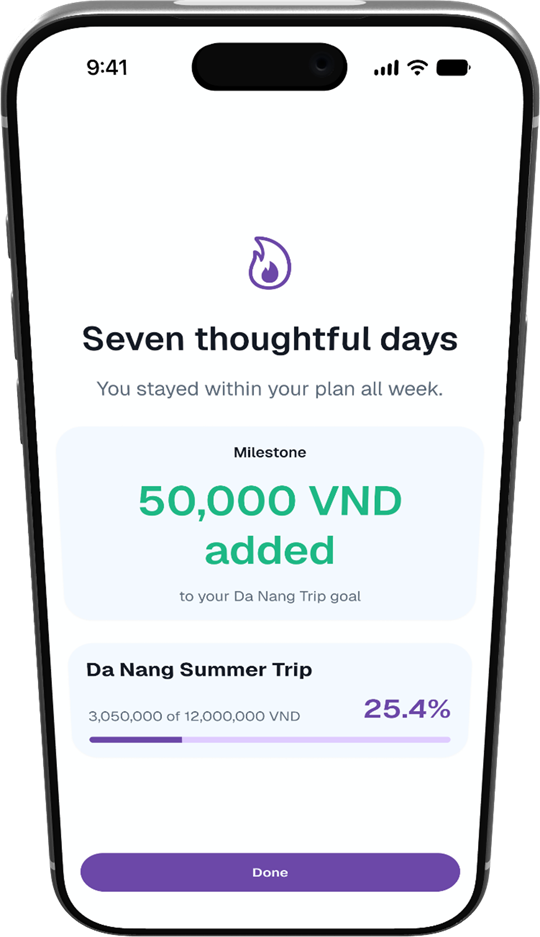
Make the future visible.
What we did not pretend to know
A concept isn't
an outcome.
The project ended with a direction, not proof. We documented three assumptions to validate next instead of inventing impact.
Will users complete setup?
Do reported risky windows match behavior?
Which anchor changes decisions?
The principle we carried forward